

Publication: Robertson Lab
Nose-to-brain delivery of IRX4204 by cell-adhesion peptide-functionalized gemini surfactant-phospholipid nanoparticles
Authors: Antoine Hakim; Gracious D. S. Kasheke; George S. Robertson; Marianna Foldvari
https://doi.org/10.1039/d6pm00414h
The Challenge
Treating central nervous system diseases like Alzheimer’s, Parkinson’s, and Multiple Sclerosis is difficult because the brain is protected by the blood–brain barrier—a strict biological wall that keeps out harmful substances, but also blocks up to 98% of potential drugs. Taking medications orally often requires high doses to get even a tiny amount into the brain, which can lead to unwanted side effects in organs like the liver.
The Solution
Researchers developed tiny, specially designed transport particles called gemini surfactant-phospholipid nanoparticles (GPNPs). These nanoparticles act as microscopic delivery vehicles for IRX4204, a drug candidate that helps activate biological repair processes in the brain.
To test this approach, researchers administered these drug-loaded nanoparticles directly through the nose (nose-to-brain delivery) in mouse models. This route aims to bypass the blood–brain barrier by traveling along natural nerve pathways from the nasal cavity directly into the central nervous system.
Key Findings (In Preclinical Mouse Models)
Higher Brain Concentration with Smaller Doses: Intranasal nanoparticle delivery in mice achieved higher drug levels in the brain using a dose 100 times smaller than an oral dose.
Massive Increase in Efficiency: In mouse trials, the nanoparticle nose-to-brain method was 136 times more efficient at delivering the drug to central nervous system tissue compared to swallowing an oral suspension.
Fewer Side Effects: Because less drug circulated throughout the body, exposure to non-target organs like the liver and bloodstream was significantly reduced in the tested mice.
Targeted Biological Action: Once inside the mouse brain tissue, the drug successfully activated specific genes responsible for neural repair and inflammation control.
Why It Matters
This study demonstrates that non-invasive, nose-to-brain nanoparticle delivery is a promising strategy in animal models for getting hard-to-dissolve medications directly where they are needed most. While these early results in mice are encouraging, further research and clinical studies in humans will be necessary before this delivery approach can be used in medical practice.
This research was funded in part by a BRC Innovation grant awarded to Dr Robertson. Gracious Kasheke is a BRC Alum, now training at Dalhousie Medical School.
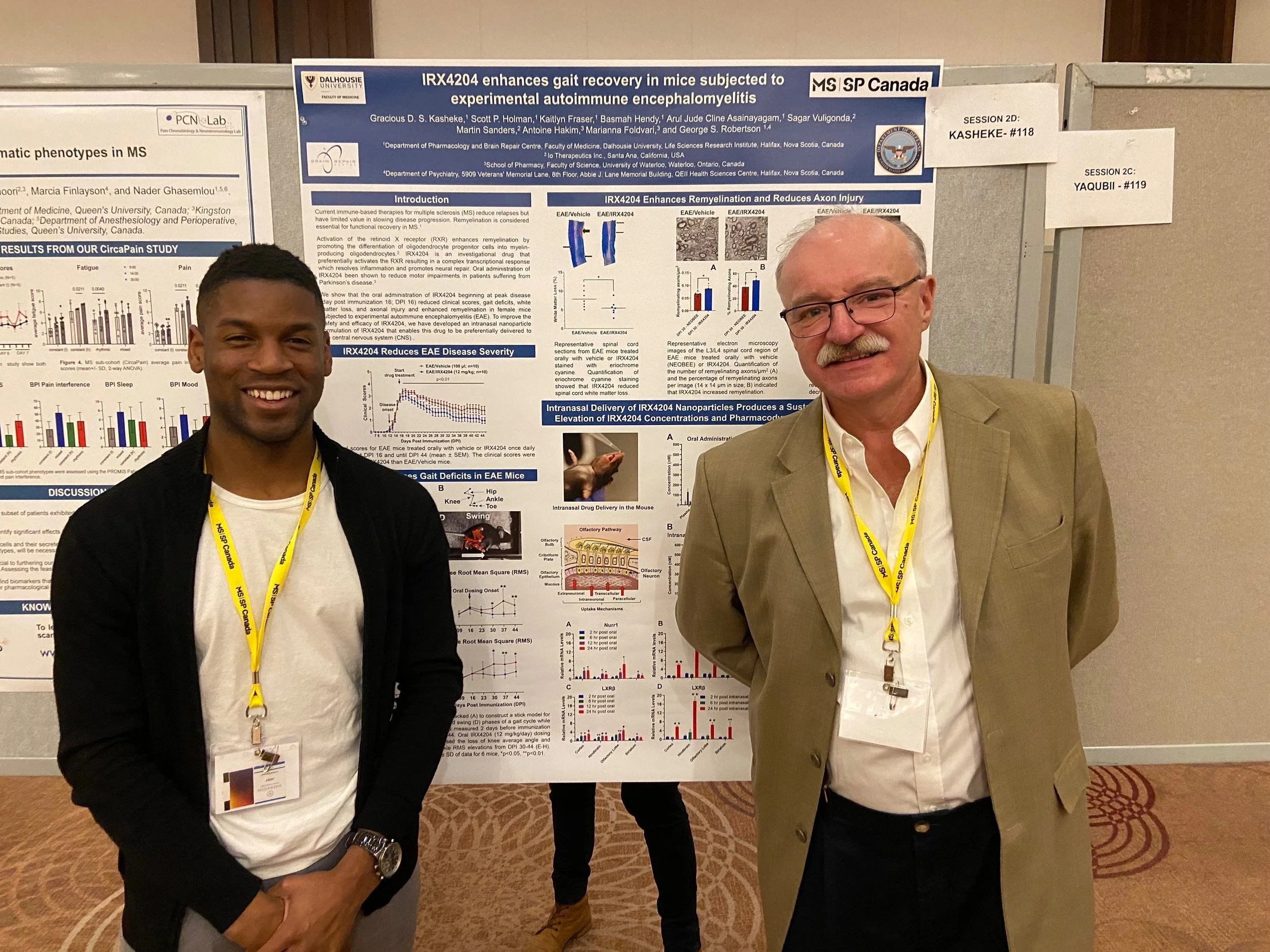
Robertson (right) & Kasheke at the 2023 EndMS conference.